You probably use the internet a lot when preparing English texts. Here’s a brief guide to online dictionaries, their advantages and perils.
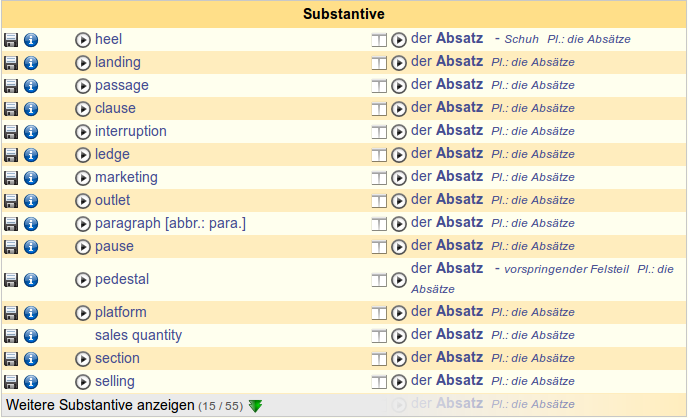
- Leo is probably the most popular online dictionary in Germany but is not very helpful unless you are a very proficient English speaker. The reason: it does not give you any context, just a list of possible translations of a word. But how can you tell which of the 15 English translations for “Absatz” refers to business? You may still find interesting discussions in the forum.
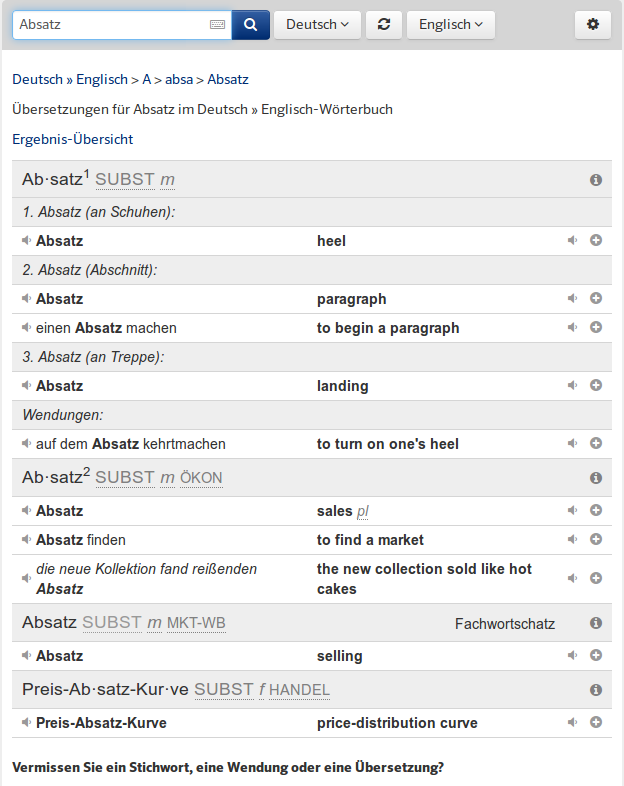
- Pons is much better in that respect, although it doesn’t have a forum, because it gives you translations in context and sample phrases.
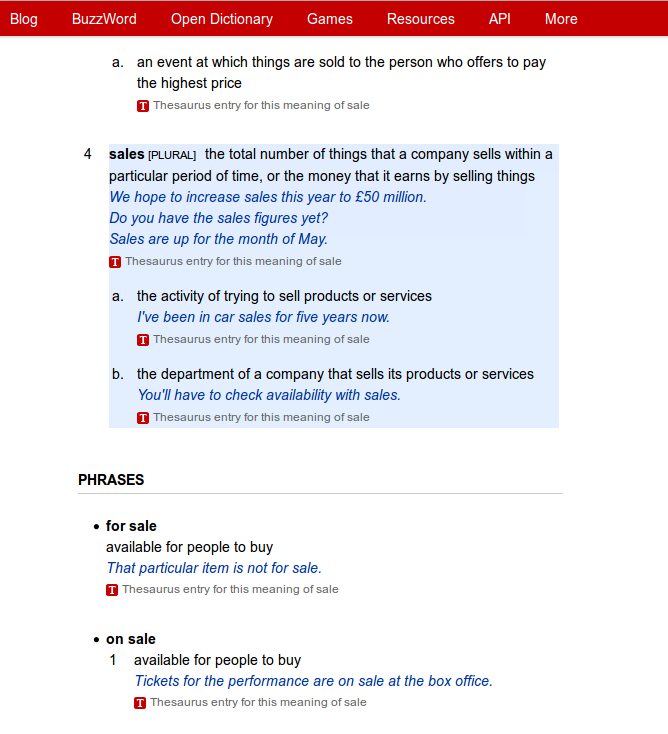
- Sometimes it can be helpful to use unilingual (English-only) dictionaries like Macmillan because they give so much more information on word forms, synonyms and usage.
-
- Leo
-
- Pons
-
- Macmillan
-
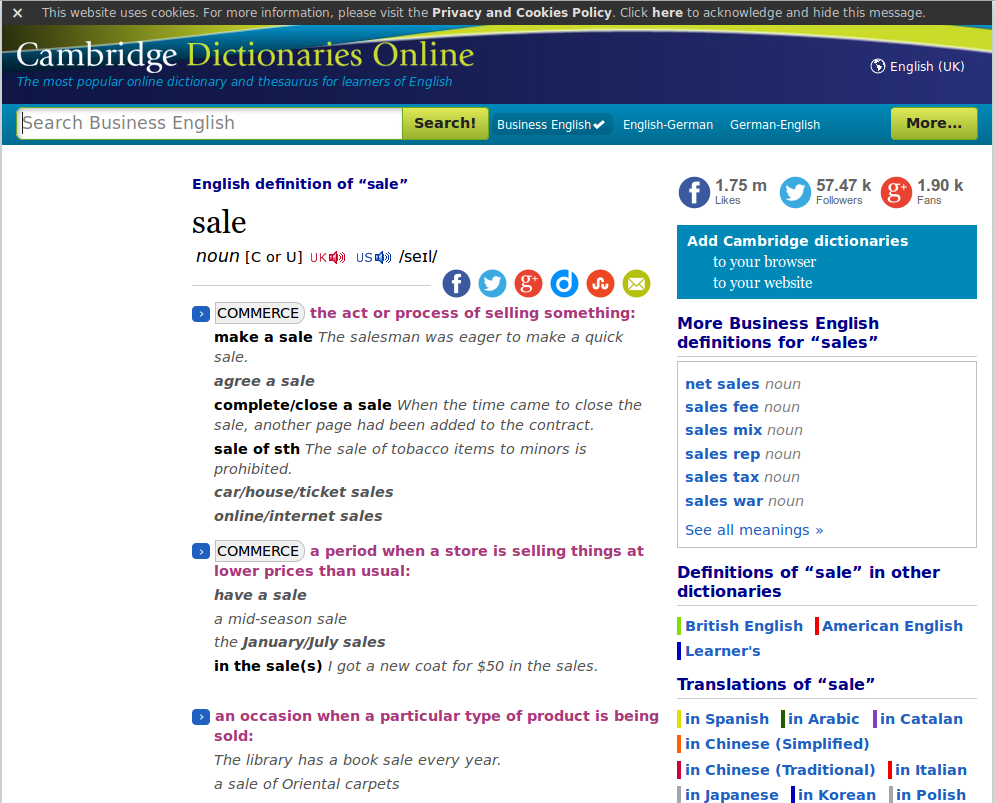
- Cambridge Business Dictionary
-
- Linguee
-

- Thesaurus

- Cambridge University provides a unilingual online Business English Dictionary.
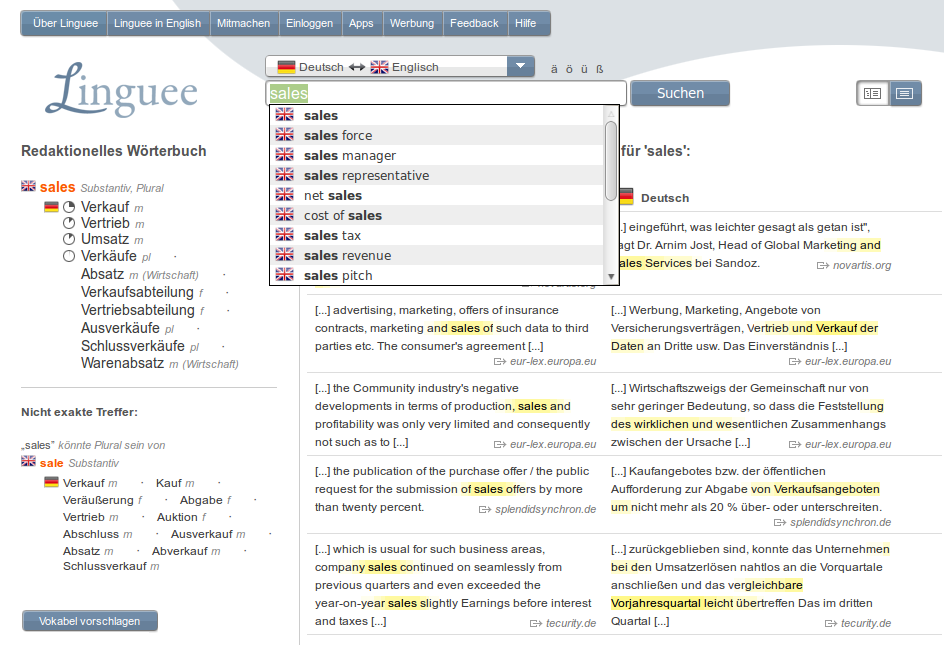
- An interesting alternative to dictionaries is Linguee which searches the internet for bilingual websites and gives you extracts from both versions. Be aware that these translations may contain errors. They show you how other people translated your word or phrase.
- A Thesaurus is a monolingual directory of synonyms (words meaning the same thing) and sometimes antonyms (words meaning the opposite).