Category Archives: Writing

Yes, to write correct English is probably one of the more challenging tasks for you. But you’ll have to learn it. Many people will judge you by your writing.

Culture Shock – an emotional rollercoaster?

Changing scenery, stepping outside your comfort zone, and experiencing different cultures is inspiring and life-changing … but there also is a side of living abroad that can be overwhelming and challenging. The new cultural elements that you encounter may be so different that they seem shocking in comparison to the norms and customs thCuSh_Rollercoasterat you were used to at home.

“Culture Shock” is used to describe the emotional rollercoaster that someone experiences when living in a new country. It affects anyone from business personnel, to students, to volunteers, to sports stars, etc. Riding the rollercoaster of culture shock, one actually follows a natural pattern of hitting peaks and valleys. The high points of interest and excitement are succeeded by lower points of depression, disorientation, or frustration. Each expat will experience these ups and downs in different degrees of intensity and for different lengths of time. This process is necessary in order to make the transition from one culture to another. Your ability to adapt, the lengths of your stay, and the support systems* you have in place will affect your way of handling culture shock.

By the end of your rollercoaster ride though, you’ll have an irreplaceable perspective gained through experience and appreciation. You may even have difficulties with re-entering your own culture. Typically, the more successful you were in immersing yourself in the country and culture where you have just been, the more difficult a time you will have re-adjusting to your own culture, and getting back into the routine of your old life. You will most likely go through an adjustment process, similar to what you might have experienced abroad. Things have changed while you were gone, and you might feel a little bit out of place in your own culture. Others may expect you to act the same as you always did, but you have changed, and find it difficult to do so. You may wish to just leave the country again as soon as possible! It will take time and patience on your part to facilitate your gradual re-adjustment to your culture.

There are many variables associated with the levels of culture shock but most sojourners point out there is a key skill acquired: having become better at acclimating to new lifestyles and more tolerant to differences, a highly beneficial effect as there will be an adjustment period with every big move in life.

*An expat network that I found to be comprehensive:
https://www.internations.org/about-internations/
Dos and don’ts in Bulgaria

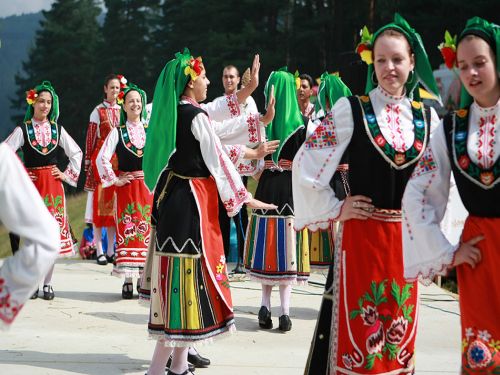
bulgaria-folk-danceby Alexander, whose family is from Bulgaria.

Dear visitors,

Welcome to Bulgaria. Enjoy yourselves, but please note the following rules so that Bulgarian people don’t misunderstand you.

The most important thing you should know is that nodding your head means ‘no’ and shaking your head means ‘yes’.

The Bulgarian president is Rosen Plevneliev, but you should know that the population don’t like him.

If you travel the country, you should go to Shipka Mountain, a nice place with a beautiful landscape. But you have to be very careful because in the mountains of Bulgaria there are a few venomous snakes and other dangerous animals.

Dos and don’ts in Germany

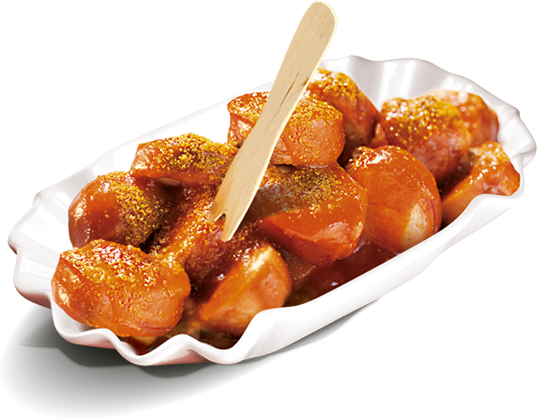
currywurst_flavorWelcome to Germany,

In Germany you have a lot of freedom as long as you don’t do any harm to anyone.

Please note that you have to pay high fines for leaving waste on the streets. Also, you shouldn’t cross the street if the traffic lights are red.

Sundays are resting days. The Germans insist on their day off on Sundays. It’s not allowed to listen to loud music or cut the lawn on Sundays.

You should eat a delicious Currywurst.

On German motorways you are allowed to drive as fast as you want unless you are in a traffic jam.

Please note that you must always be on time for meetings or work.

Visitors should not address strangers with “du” or “dich”. You have to say “Sie and Ihnen”, which is the more polite way.

Your Fair Trade labels

Natural Eco (Anna, Cindy, Maria)

Our label is Natural Eco, and our product is Natural Eco chocolate. The consumer of Natural Eco chocolate can be sure about the high quality in cultivation and production. We guarantee that we work without child labour. Furthermore, we offer farmers good working conditions and fair prices. For a healthy product, we use natural instead of artificial fertilisers. Our fertilisers are made from manure.

FairMilk (Kim, Stephan)

FairMilk is a label which supports regional farmers. We guarantee good working conditions on milk producers’ farms. Producers should only use organic food for their animals. We also see to it that farmers respect the environment and animal welfare. We ensure that all dairy products are regional and are offered and distributed in the region. We encourage farmers to be sustainable. We try to offer our products at reasonable prices. FairMilk strives to establish themselves on/in the domestic market.

PureBanana (Nina, Celine, Anna)

PureBanana is an international certification system for organically grown bananas. We reject all kinds of pesticides and artificial fertilisers because we respect the environment. We guarantee good working conditions and fair prices on producer’s farms and provide opportunities for development. These opportunities include that we work without child labour to afford them a better and fulfilled life. All our trade relations are regularly controlled by certified Fair Trade consultants. We see to it that all our products are in good order and condition.

Fair Friends (Martina, Nga)

We are a charity foundation that is mainly accelerating Fair Trade in the Philippines. Our mission is to promote sustainable development through Fair Trade, together with poverty alleviation. For the past 40 years we have been enhancing development towards more human rights while engaging in Fair Trade practices. With a team of more than 60 Philippino professionals running 12 different projects, we try to change the unjust socio-economic system that suppresses people, grabs their land and keeps them in poverty. We do so especially by trading mango products and hand-crafting products from discarded materials. We are striving to maintain biodiversity by growing many different varieties of mango. With our education projects, we are fighting child labour and child prostitution. Simply sharing and distributing natural resources and opportunities will give thousands of people economic benefits of their own efforts.

What is Fair Trade?

  • good working conditions on producers’ farms
  • transparency and accountability with regard to the whole supply chain
  • fair prices paid to producers
  • independent markets (guaranteed prices)
  • no child labour
  • respect for the environment
  • provide opportunities for development
  • no discrimination because of gender, colour of skin etc.

CSR

csr_logo-2Corporate Social Responsibility

  • is a way to describe responsibility in business. (Yvette)
  • should help keep a balance between social, economic and environmental factors in business (Julian)
  • is a system to evaluate companies and to provide employees with better social standards so as to promote understanding within the company (Kim, Lena, Andi)
  • explains the responsibility of a company towards society, the environment and the economy (Stephan, Lara)

Our CSR principles

Clothes manufacturer (Julian, Vanessa W.)

  • Better working conditions and payment
  • Buy cotton from sustainable growing

Food producer (Yvette, Nga, Nadja)

  • less plastic packaging
  • produce more vegetables than meat
  • flexible working hours for pregnant women

Coffee producer (Kim, Lena, Andi)

  • support familiy farming
  • provide appropriate payment
  • farmers’ children should go to school
  • use organic growing methods and fertiliser
  • equality for men and women
  • packaging should be made of recycled materials
  • transparency for customers
  • get a Fair Trade label

Organic sportswear (Cindy, Anna, Jan, Christopher)

  • use healthy, organic materials without chemical additives
  • working conditions (fixed working hours, minimum wage, workplace safety)
  • no child labour
  • get a certificate (Fair Trade, Organic Farming)

Making sentences

Here is a task you should do in order to prepare for the exam. The idea is to make a sentence from five words. The examples are rather difficult and not very intuitive. I can say with confidence that your exam task will be a bit easier, but have a try.

Making sentences – task

Making sentences – solutions

See also Taking a message for a listening exercise. Both of these tasks will be part of your exam.

Merry Christmas and a happy new year! See you in 2016.

Daniel

InStep – your emails

I’ve taken the pains of typing all your emails into a text file in order to add corrections and comments. On the whole, these are good achievements, although some of you were not very talkative.

Whoever wrote ‘The majority of our staff have expressed’ — I salute you!

InStep relocation – your emails.

capital-lettersCapitalisation in proper names and titles

Job titles are usually capitalised (written with Big Initial Letters) when you’re referring to someone specific:

  • We talked to InStep’s Human Resources Manager.

but not when talking about a job in general:

  • When I grow up, I want to be a human resources manager.

Some words like and, or and prepositions are never capitalised:

  • the Head of Production, the Research and Development Manager

How to change the world

be-the-change-you-wish-to-see-in-the-worldWhen we started about a month ago, I asked you what you would like to change in order for our world to become more sustainable. Here are your answers.

Now that you’ve got some more experience with both English and business, it’s time to think about how these changes might be achieved.

Write 2-3 sentences to point out necessary actions to achieve the change you suggested.

Send your texts to me () as Word or OpenOffice files to get a written feedback. No PDFs!


 Grammar tip:

You can use conditional phrases using in order to … (um … zu) and … will have to / would have to (… muss / müsste):

  • In order to reduce CO2 emissions from agriculture, people will / would have to eat less meat.

If there’s a direct subject in your clause, it’s included with for:

  • In order for agriculture to effectively conserve soils, incentives will have to be created to promote organic farming.