Tag Archives: Cultures

Culture Shock – an emotional rollercoaster?

Changing scenery, stepping outside your comfort zone, and experiencing different cultures is inspiring and life-changing … but there also is a side of living abroad that can be overwhelming and challenging. The new cultural elements that you encounter may be so different that they seem shocking in comparison to the norms and customs thCuSh_Rollercoasterat you were used to at home.

“Culture Shock” is used to describe the emotional rollercoaster that someone experiences when living in a new country. It affects anyone from business personnel, to students, to volunteers, to sports stars, etc. Riding the rollercoaster of culture shock, one actually follows a natural pattern of hitting peaks and valleys. The high points of interest and excitement are succeeded by lower points of depression, disorientation, or frustration. Each expat will experience these ups and downs in different degrees of intensity and for different lengths of time. This process is necessary in order to make the transition from one culture to another. Your ability to adapt, the lengths of your stay, and the support systems* you have in place will affect your way of handling culture shock.

By the end of your rollercoaster ride though, you’ll have an irreplaceable perspective gained through experience and appreciation. You may even have difficulties with re-entering your own culture. Typically, the more successful you were in immersing yourself in the country and culture where you have just been, the more difficult a time you will have re-adjusting to your own culture, and getting back into the routine of your old life. You will most likely go through an adjustment process, similar to what you might have experienced abroad. Things have changed while you were gone, and you might feel a little bit out of place in your own culture. Others may expect you to act the same as you always did, but you have changed, and find it difficult to do so. You may wish to just leave the country again as soon as possible! It will take time and patience on your part to facilitate your gradual re-adjustment to your culture.

There are many variables associated with the levels of culture shock but most sojourners point out there is a key skill acquired: having become better at acclimating to new lifestyles and more tolerant to differences, a highly beneficial effect as there will be an adjustment period with every big move in life.

*An expat network that I found to be comprehensive:
https://www.internations.org/about-internations/
Dos and don’ts in Bulgaria

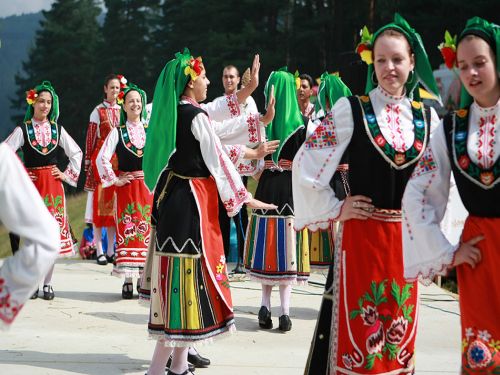
bulgaria-folk-danceby Alexander, whose family is from Bulgaria.

Dear visitors,

Welcome to Bulgaria. Enjoy yourselves, but please note the following rules so that Bulgarian people don’t misunderstand you.

The most important thing you should know is that nodding your head means ‘no’ and shaking your head means ‘yes’.

The Bulgarian president is Rosen Plevneliev, but you should know that the population don’t like him.

If you travel the country, you should go to Shipka Mountain, a nice place with a beautiful landscape. But you have to be very careful because in the mountains of Bulgaria there are a few venomous snakes and other dangerous animals.

Dos and don’ts in Germany

currywurst_flavorWelcome to Germany,

In Germany you have a lot of freedom as long as you don’t do any harm to anyone.

Please note that you have to pay high fines for leaving waste on the streets. Also, you shouldn’t cross the street if the traffic lights are red.

Sundays are resting days. The Germans insist on their day off on Sundays. It’s not allowed to listen to loud music or cut the lawn on Sundays.

You should eat a delicious Currywurst.

On German motorways you are allowed to drive as fast as you want unless you are in a traffic jam.

Please note that you must always be on time for meetings or work.

Visitors should not address strangers with “du” or “dich”. You have to say “Sie and Ihnen”, which is the more polite way.

A diamond among authors

330px-Jared_diamondSo we talked about the history of business and trade. Which came first, money or markets, money or interest?

If you’re interested in human history in a broader context, more questions may pop up: Why have we stopped living as hunter-gatherers? Why and when did states evolve? Why did the Mayan and Greenland Viking Empires collapse but not Spain or China? Why did Europeans conquer native America and not the other way round? Why are most African countries notoriously poor while Europe and North America seem to be predestined for wealth? Is it because Africans are less bright than we are?

Guns_Germs_and_SteelJared Diamond, an American biologist and historian, has probed into these questions and gives surprising answers based on his broad knowledge of both natural sciences and society. His most famous books include: *

His books have also been translated into German, but if you want to improve your English, I’d recommend the original versions.

* I don’t want to imply that you should use Amazon. Search for these titles anywhere else, and you may find better offers.

The Simpsons

The Simpsons is a satirical depiction of the middle-class American lifestyle epitomized by the Simpson family, which consists of Homer, Marge, Bart, Lisa, and Maggie. The show is set in the fictional town of Springfield and parodies American culture, society, television, and many aspects of the human condition. (Wikipedia)


Would you like to watch a Simpsons episode? As a reward for your hard work, we may watch the very first episode ever aired, from 1989, and it’s about Christmas!

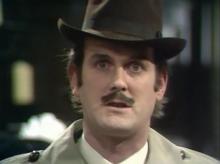
Monty Python’s Flying Circus

‘Monty Python’s Flying Circus’ was a TV comedy series aired around 1970 on the BBC. Some of the sketches were translated and brought to the German public in the film ‘Monty Pythons wunderbare Welt der Schwerkraft’.

Now, is it just nonsense or can you learn something from it? I should say you can. Many of Python’s sketches revolve around language and logic. When you understand why people laugh at them, you’ll have understood a great deal about the language.

Then these guys are excellent actors. Often you will get the general idea without understanding much of the text. But some of the phrases they use will stick in your mind to be recalled later. Just be aware that they sometimes use offensive language.

The Smuggler

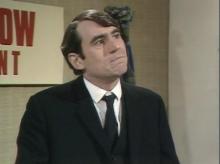
This is related to travel. A smuggler meets a customs officer.

Would you like to watch a Monty Python episode in class?

Brassed Off

Mark Herman’s 1996 film Brassed Off shows the struggle of a miners’ band to avert the closure of their pit in Grimley, Yorkshire, in 1992. Although Grimley is a fictional village, both the pit and the band existed (the real village is Grimethorpe), and the story is partly true. The real band, which also played the soundtrack to the film, is called the Grimethorpe Colliery Band and has been playing on to this day as a professional brass band.


The film features Pete Postlethwaite (Jurassic Park), one of Britain’s best-loved actors, as band leader Danny, and Ewan McGregor (Trainspotting, Star Wars) playing the trumpet.