You are probably aware that in English, adjectives always precede the noun they determine. (It’s the same in German, so this rule won’t cause you much trouble if German is your native language.)
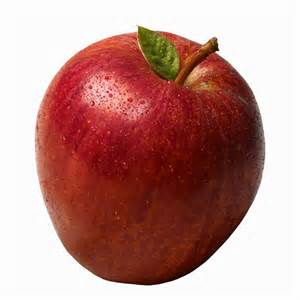 Example: a red apple.
But wait: almost all participles (the verb forms that are used for perfect and continuous tenses) can be used as adjectives, and these can be placed after a verb. They then indicate a relative clause, part of which was omitted:
the people concerned = the people who are concerned
the damage done = the damage that was done.
the cars waiting = the cars that were/are waiting.
However, this doesn’t work with true adjectives. You can’t say
an apple red (except in poetry, where artistic licence bends the rules of grammar).
However, there is one true English adjective that can be placed directly after a noun. It can also occur before a noun, with a slightly different meaning each time.
Any ideas? Click ‘LEAVE A REPLY’ and tell us. The first person to come up with the correct solution (or any correct solution, for there may be more than one) will win a bottle of delicious homemade apple juice.
I will give you a hint on Friday, unless someone has solved the problem by then.
Every star visible in the sky is far away.
Great find, Niclas! I didn’t think of that one. It’s not exactly what I meant because the meaning doesn’t change when you put it before a noun, but the bottle goes to you anyway.
Are there any more words like ‘visible’?
God almighty
Well, yes and no. ‘God almighty’ is an expression like ‘all things great and small’. I was looking for adjectives you can use in any context. Should have explained my rules better.
Glass of juice?
Sounds good! 😀
He is here to find the person responsible.
Yep, that works. Thank you for contributing!
However, the word I was thinking of is very different. It ends in -er and is really unique, as far as I know.
Here is the hint: The adjective exists in German, too, and it is a brand name for a range of surface cleaners by Procter & Gamble.
I’m happy that Daniel teaches us the PROPER use of english grammar.
Ha ha! You’re welcome. However, we haven’t been talking so much about grammar PROPER yet. We’re starting tomorrow with the Simple and Continuous tenses.