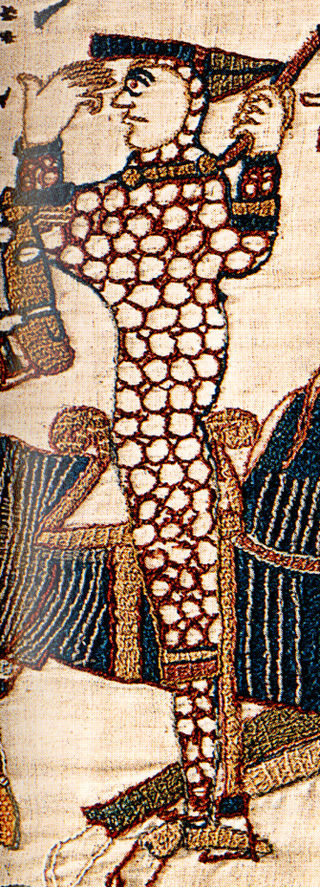
William the
Conqueror dressed as a fish
The native inhabitants of Britain spoke Celtic languages, some of which still exist in the form of modern Irish, Gaelic (spoken in Scotland) and Welsh (spoken in Wales). At the same time, large parts of England were part of the Roman Empire, so the upper class would speak Latin.
Then, in the Early Middle Ages, came Germanic settlers called Anglo-Saxons and introduced their own culture, including vocabulary and grammar. They came as migrants rather than conquerors and mingled with the native population. That was when Old English developed as a language.
In 1066, William the Conqueror invaded England from Normandy and made Norman French the language of the upper class.
This is only a much simplified summary. You can find more detail in this video, if you’re interested:
But, as a result of this history, formal English still uses a lot of words derived from Latin and French, while informal speech makes extensive use of Germanic words. This is important to know when you have a choice between two or more translations of the same German word.
Here are some verb pairs with almost the same meaning:
Germanic (informal) |
French or Latin (formal) |
| ask | inquire |
| begin | commence |
| buy | purchase |
| choose | select |
| come | arrive |
| end | finish |
| go on | continue |
| help | assist |
| leave | depart, desert |
| watch | monitor |